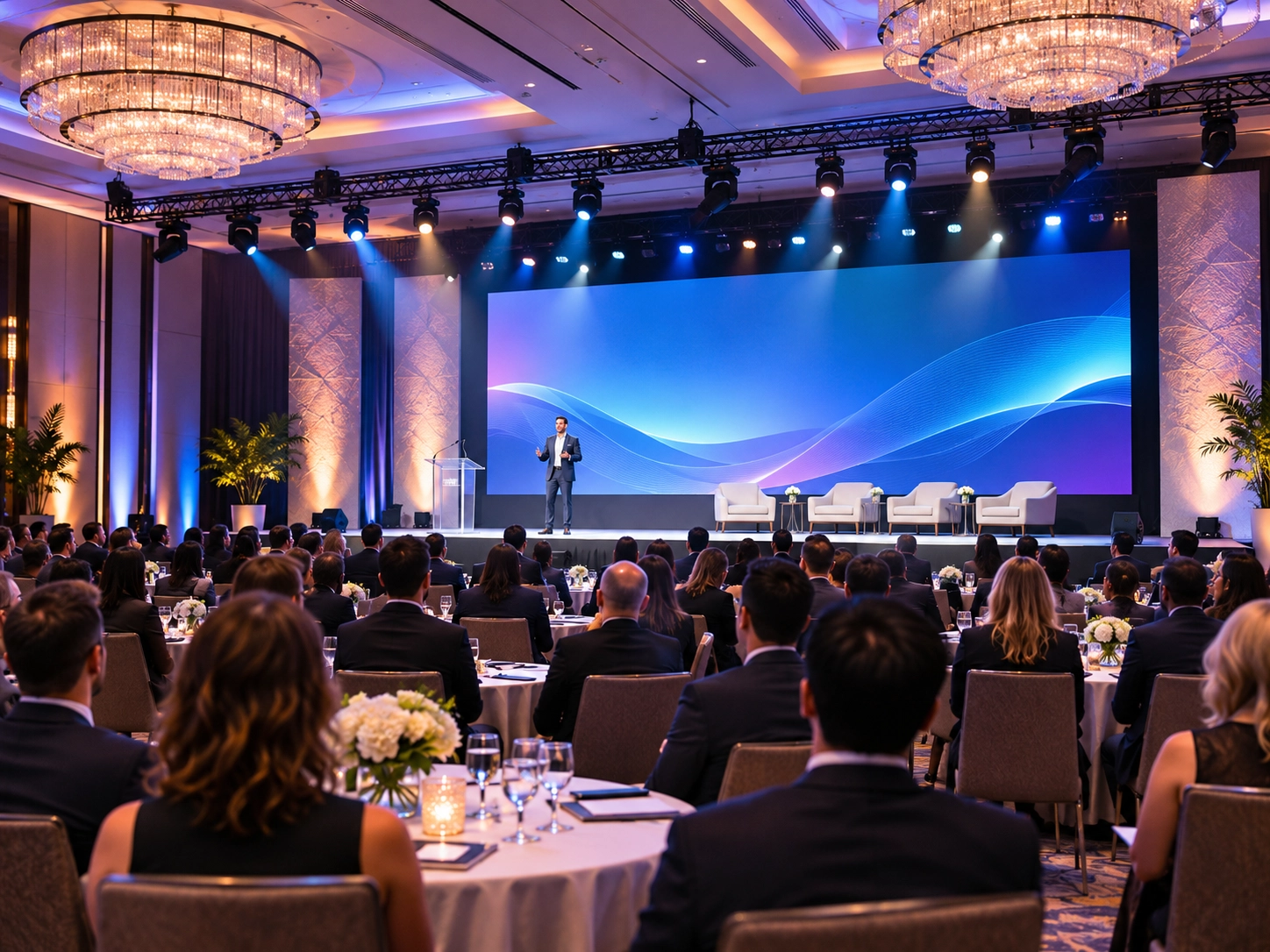
Great corporate event lighting does more than illuminate a venue. It directs attention, enhances presentations, supports brand identity, and creates memorable experiences for guests.
Whether you’re planning a conference, awards ceremony, product launch, or networking reception, your lighting should work alongside staging, audio, and visual displays. This coordination is essential to successful corporate event production.
The best corporate event lighting setup combines clear presenter illumination, comfortable ambient light, focused accents, and well-timed transitions. The right combination depends on your venue, audience, event format, and whether the programme will be recorded or livestreamed.
For businesses considering event lighting in Vancouver, understanding these principles makes it easier to plan an effective event and communicate requirements to the production team.
This guide covers lighting for corporate events, from essential techniques and equipment to practical planning tips and common mistakes.
Why Is Lighting Important for Corporate Events?
Professional event lighting influences what audiences see, where they focus, and how they experience the event.
A well-planned lighting system supports four objectives:
- Visibility: Speakers, panelists, and important presentation areas remain clearly visible.
- Atmosphere: Lighting establishes the appropriate mood for formal presentations, celebrations, or networking.
- Brand identity: Colour and illuminated visual elements reinforce a company’s branding.
- Content quality: Balanced illumination improves event photography, video recording, and livestreaming.
Lighting should also support other production elements. A poorly lit speaker can be difficult to see even when the stage and screens look impressive.
For a broader understanding of how these technical elements work together, a corporate event AV checklist can help organize lighting, audio, video, and staging requirements before the event.
What Are the Different Types of Corporate Event Lighting?
Understanding the different types of lighting for events helps organizers select the right approach for each area of a venue. For a practical comparison of fixture roles, read our uplighting vs stage lighting guide.
| Lighting Type | Main Purpose | Best Application |
|---|---|---|
| Ambient Lighting | Provides overall illumination | Receptions and networking areas |
| Accent Lighting | Highlights selected features | Logos, products, and architecture |
| Task Lighting | Supports practical activities | Registration desks and workstations |
| Decorative Lighting | Creates visual atmosphere | Galas and branded environments |
| Stage Lighting | Illuminates presenters and performers | Conferences and award ceremonies |
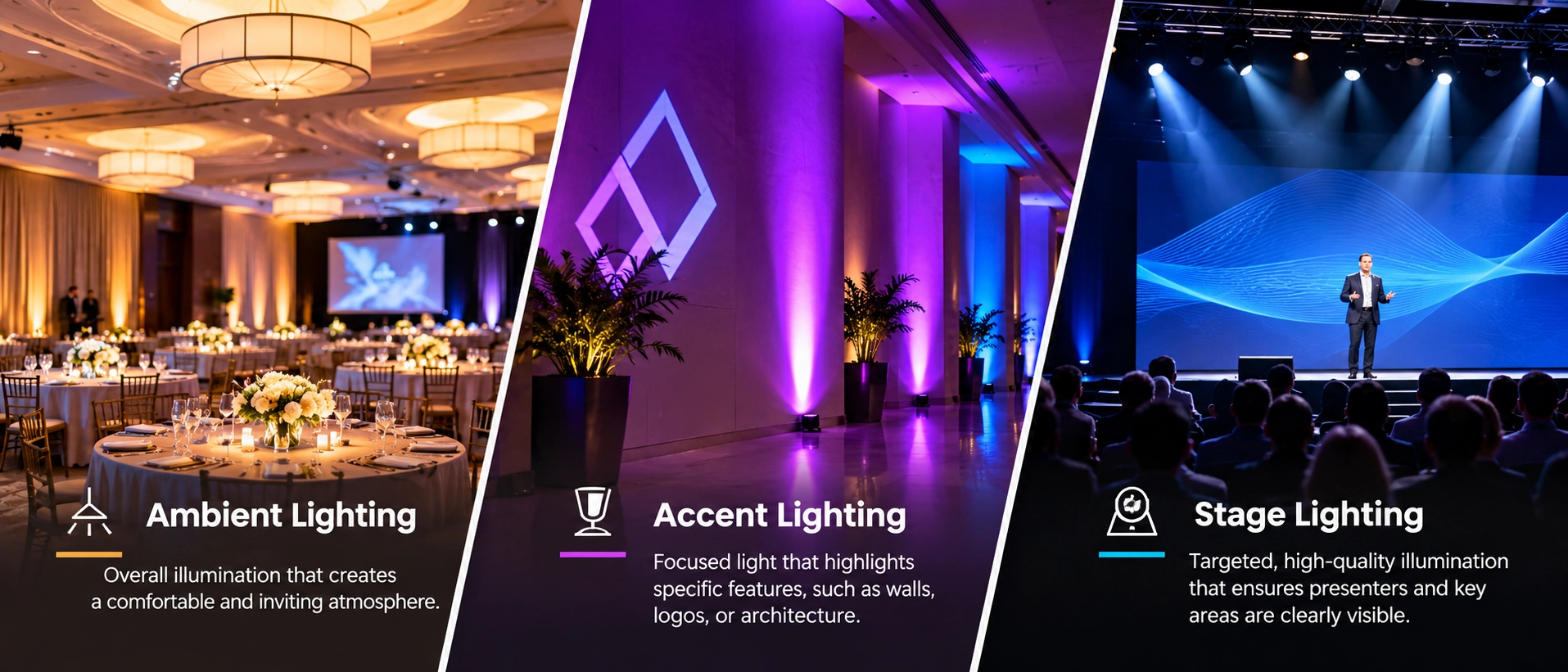
Ambient Lighting creates the foundation of the event’s atmosphere. Accent Lighting adds visual interest by drawing attention to specific elements.
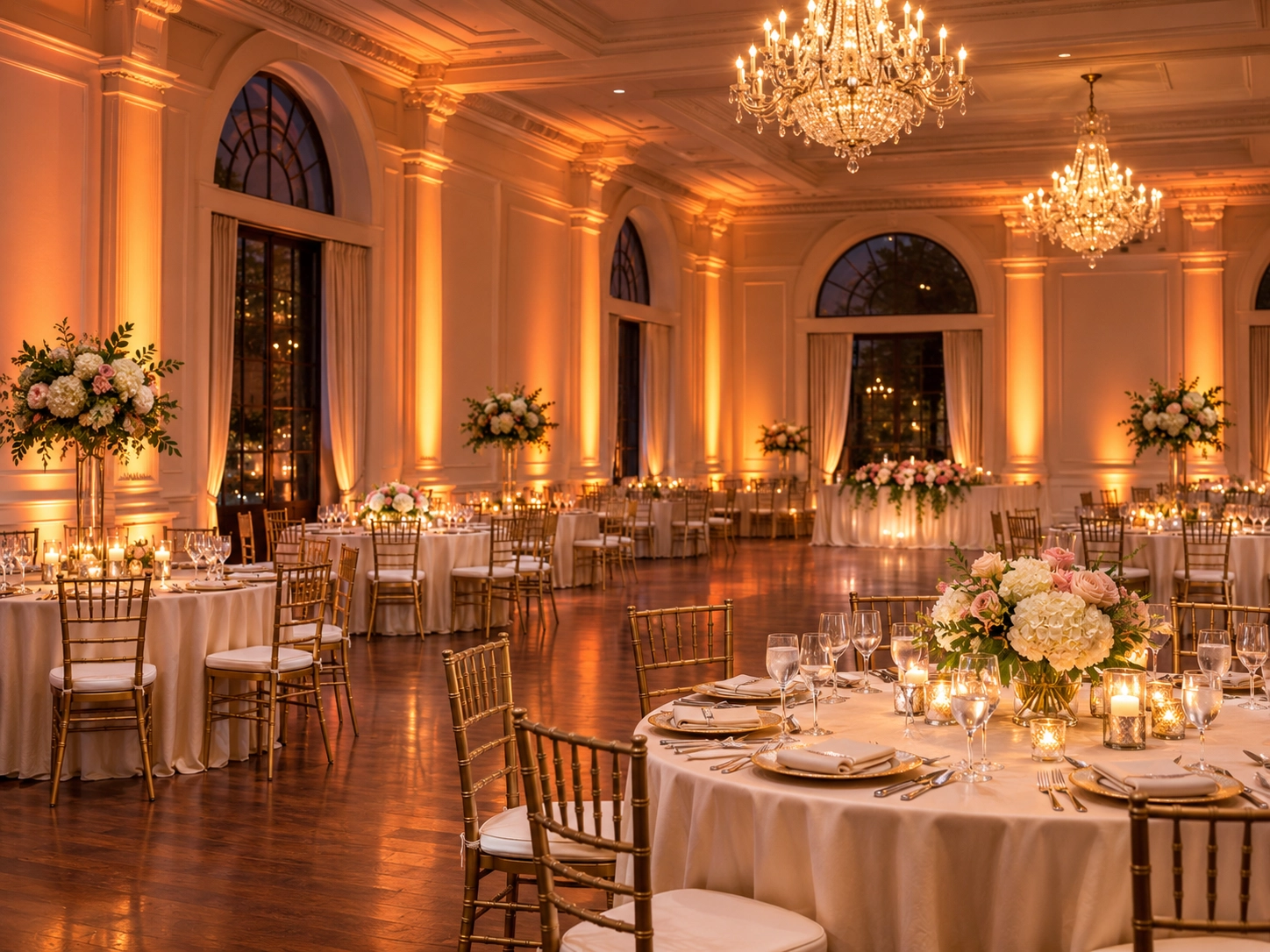
For example, event uplighting and uplighting for corporate events can highlight architectural details without requiring major changes to the venue. Downlighting and Side Lighting can provide more focused illumination where appropriate.
Decorative Lighting, including Gobo Projections and coloured effects, is especially useful for corporate branding. Meanwhile, Task Lighting keeps functional areas usable and comfortable.
The goal is to layer lighting according to its purpose, rather than making every area equally bright.
How to Design Lighting for a Corporate Event
Effective Corporate Event Lighting Design starts with a clear understanding of the space and programme.
A professional Event Lighting Design process should address four decisions.
1. Define the Event’s Visual Priorities
Identify the moments requiring attention: keynote presentations, panel discussions, award announcements, or product reveals.
A successful Lighting Plan prioritizes these activities before decorative effects.
2. Evaluate the Venue
Consider ceiling height, stage placement, existing fixtures, windows, electrical access, and audience sightlines.
For daytime events, natural light can create unexpected challenges. A presenter standing in front of a bright window may appear underexposed on camera, even when the room seems adequately lit.
An effective event space lighting design accounts for these conditions before installation begins.
3. Balance Colour and Brightness
Color Temperature, Light Intensity, Light Direction, and Lighting Contrast influence both visibility and atmosphere.
For presentations, consistent facial illumination is generally more important than dramatic colour effects. Decorative lighting can use corporate colours while presenter lighting remains natural and camera-friendly.
4. Plan Changes Throughout the Programme
A keynote presentation, networking break, and awards announcement should not necessarily use the same lighting scene.
Professional lighting design and production coordinates these transitions with the programme, keeping the experience consistent without distracting the audience.
How to Light a Corporate Stage and Presenters
Corporate Event Stage Lighting requires special attention because speakers must remain visible from different audience and camera angles.
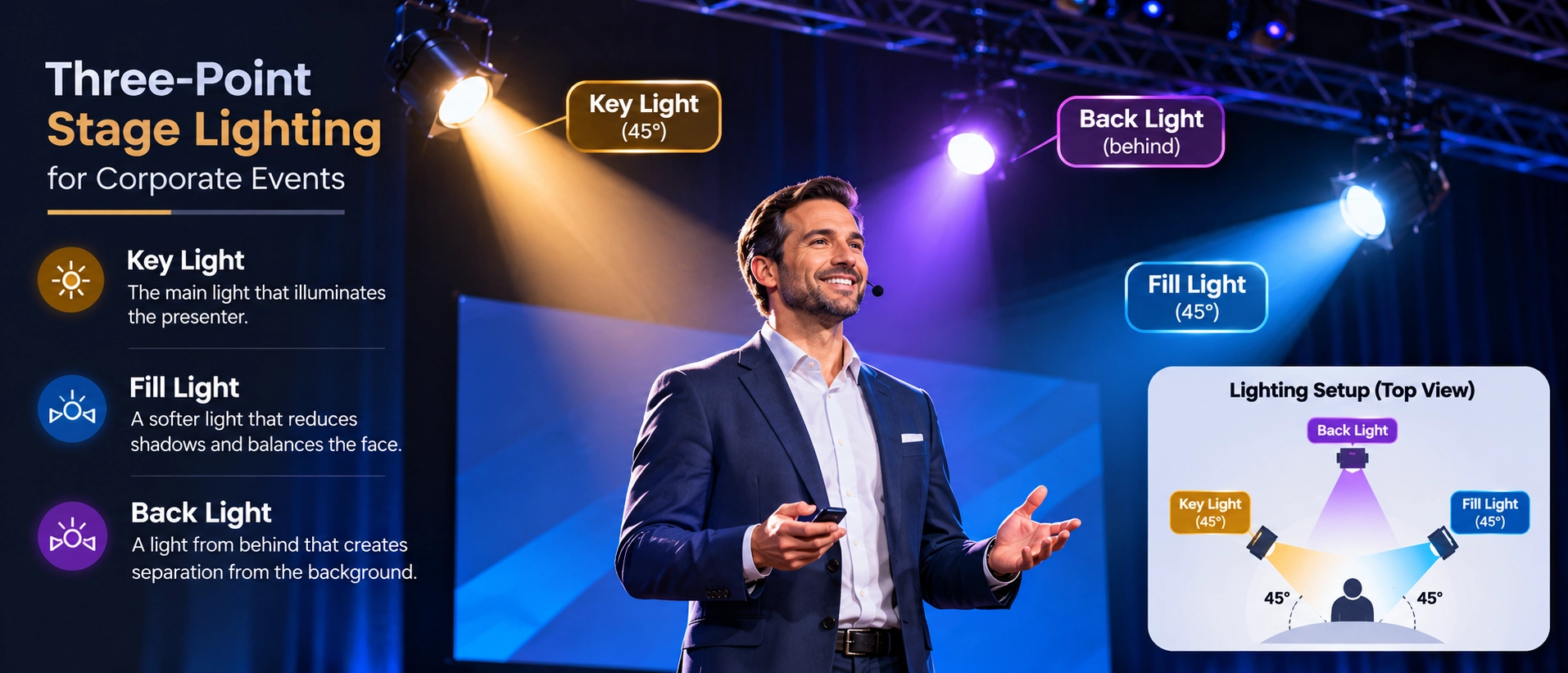
Key, Fill, and Back Lighting
A typical corporate stage lighting setup may combine:
- Key Light: The main source illuminating the speaker.
- Fill Light: Softens strong shadows and balances facial illumination.
- Back Light / Hair Light: Creates separation between the person and the background.
These techniques support effective Presenter Lighting, particularly when a stage is used for recorded presentations.
Panel Discussions and Fireside Chats
Panel Lighting and Fireside Chat Lighting require more than illuminating a single podium.
Each participant should remain visible while seated, turning, or speaking to another panelist. Consistent Background Lighting and controlled Scenic Lighting can help maintain a balanced composition.
LED Walls, Cameras, and Stage Lighting
Bright display screens create additional challenges.
LED Wall Brightness, Camera Exposure, and the lighting on the presenter must work together. If the screen is significantly brighter than the speaker, camera images may show a well-exposed background but an underexposed face.
During rehearsal, technicians should check screen output and Dynamic Range through the actual cameras.
This is particularly important when combining LED wall solutions with professional stage lighting.
For a better understanding of display technology, the articles what is an LED wall and how LED walls work explain the systems behind large event displays.
Essential Lighting Equipment for Corporate Events
Choosing the right Event Lighting Equipment depends on venue size, programme complexity, and the required visual effects.
| Equipment | Function | Common Use |
|---|---|---|
| LED Lights / LED Panels | Flexible, energy-efficient illumination | General and video-friendly lighting |
| Spotlights | Direct concentrated light | Speakers, products, and awards |
| Floodlights / Wash Lighting | Illuminate larger areas | Stage backdrops and walls |
| Moving Head Lights | Create programmable movement | Entrances and celebrations |
| Gobo Lighting | Projects patterns or logos | Branded environments |
| Lighting Fixtures / Lighting Rigs | Provide positioned lighting coverage | Stages and larger venues |
Modern LED Event Lighting and Color-Changing LEDs allow multiple looks without replacing fixtures between programme segments.
For advanced productions, Intelligent Lighting, DMX Control, Wireless DMX, and Lighting Control systems coordinate fixture settings and programmed transitions.
Safe installations also require suitable Rigging Equipment, correctly planned power distribution, and experienced technicians.
Battery-Powered Fixtures can be useful when cable access is limited, although runtime and reliability should be confirmed before the event.
Corporate Event Lighting Ideas for Different Occasions
The most useful Corporate Event Lighting Ideas are based on what guests need to see and experience.
| Event Type | Lighting Priority | Recommended Approach |
|---|---|---|
| Corporate Conference | Clear presentations | Even Conference Lighting with balanced screen brightness |
| Awards Ceremony | Highlight key moments | Focused Award Night Lighting and programmed cues |
| Product Launch | Direct attention to the product | Product Launch Lighting with accent and brand-colour washes |
| Networking Reception | Comfortable atmosphere | Soft ambient light and selective uplighting |
| Hybrid Event | Support cameras and in-person guests | Balanced Lighting for Livestreaming |
For conferences, Conference Lighting Design should emphasize presenter visibility, readable displays, and comfortable audience conditions.
At award ceremonies, Stage Spotlights, Stage Backdrop Lighting, and Lighting Cues can support winner announcements without overwhelming the programme.
Product launches may benefit from Corporate Logo Projection, Brand Colors, and controlled Special Effects Lighting to draw attention to the featured product.
At receptions, Ceiling Washes, Colored Event Lights, and subtle Photo Booth Lighting can create visually distinct spaces.
For events moving from daytime presentations into evening celebrations, Day to Night Transition Lighting can gradually change the room’s atmosphere without interrupting the event.
Lighting Inspiration From Danesh Production Projects
Actual event environments demonstrate how production requirements change from one venue to another.
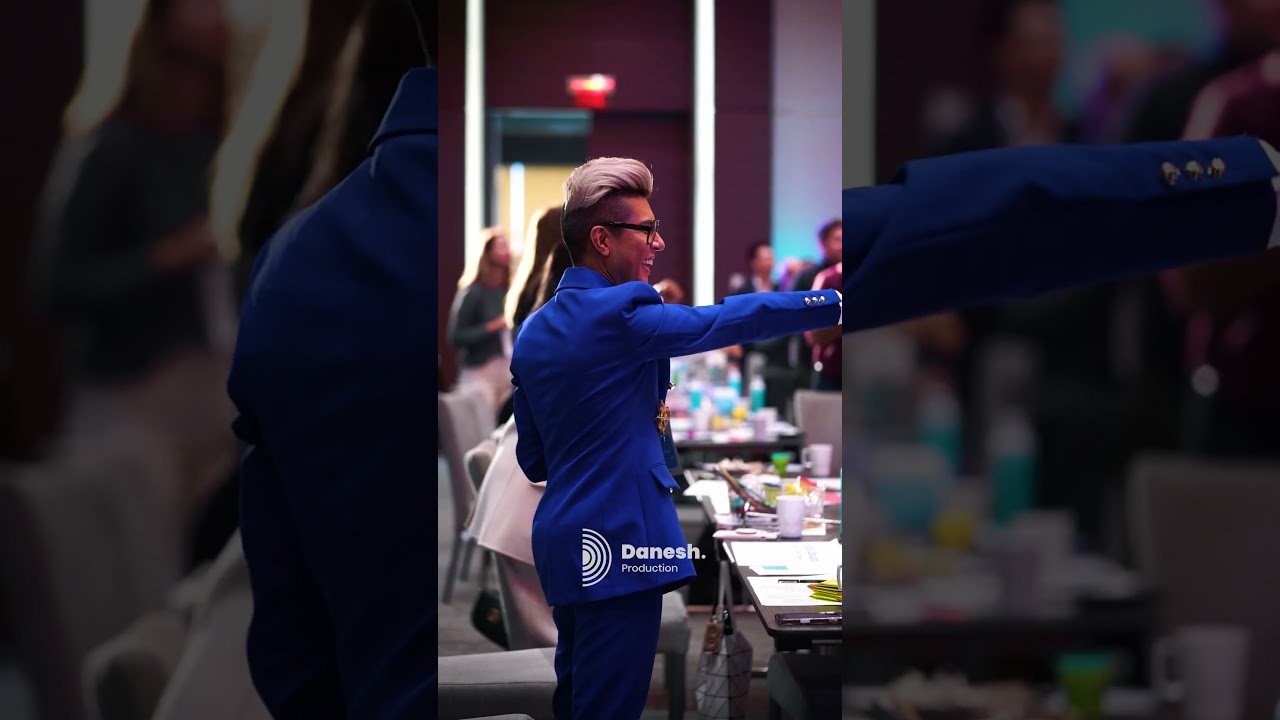
Danesh Production’s Neekoo 2026 corporate event at Fairmont Hotel Vancouver provides a relevant corporate-event portfolio example.
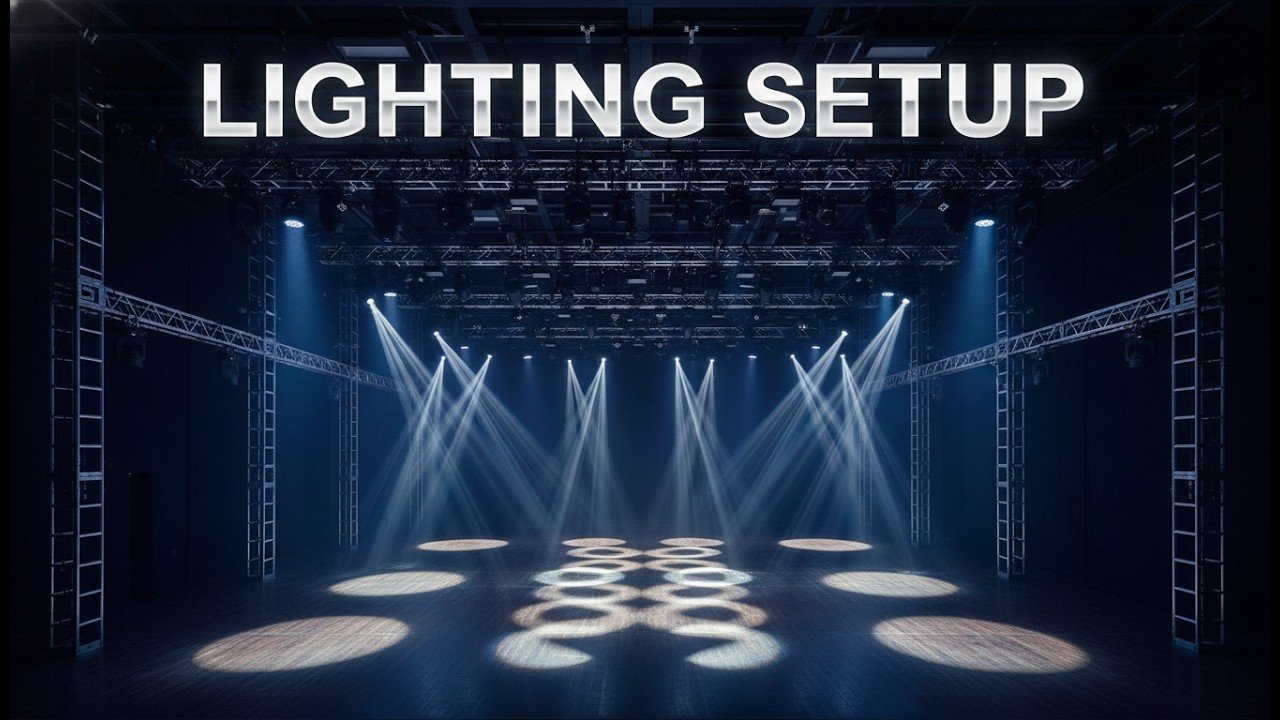
Its VISM stage lighting project also illustrates the type of live-event environment where lighting must coordinate with stage activity and programme timing.
These examples highlight why lighting should be planned for the actual event format rather than selected solely for its decorative appearance.
How to Plan a Corporate Event Lighting Setup
A reliable Event Lighting Setup requires coordination, installation planning, and technical testing.
Use this checklist before the event:
Confirm the venue layout, stage positions, and audience sightlines.
Review power availability, ceiling access, and Rigging restrictions.
Coordinate Lighting and Projection with sound, screens, and cameras.
Schedule installation, programming, and rehearsals.
Test Audience Lighting, House Lighting, and stage visibility.
Program Lighting Cues for key transitions.
Confirm backup equipment and Lighting Troubleshooting procedures.
For events involving broadcast or recording, test Lighting for Livestreaming through the cameras that will actually be used.
A Lighting Designer and Lead Lighting Operator (L1) may be responsible for different aspects of a complex production, from the visual plan to live cue execution.
This coordination becomes particularly important when an event uses multiple presentation areas, camera positions, or programmed lighting effects.
Common Corporate Event Lighting Mistakes to Avoid
Even an attractive setup can produce poor results if practical requirements are overlooked.
| Common Mistake | Potential Problem | Better Approach |
|---|---|---|
| Excessive brightness | Glare and discomfort | Balance light levels across the venue |
| Uneven presenter lighting | Distracting facial shadows | Test every speaking position |
| Poor colour consistency | Unnatural skin tones on camera | Calibrate presenter-facing fixtures |
| Too many moving effects | Distracts from presentations | Reserve movement for appropriate moments |
| Unbalanced screen brightness | Poor video exposure | Coordinate screen output with foreground lighting |
| Skipping rehearsals | Incorrect lighting transitions | Test cues using the final programme |
Outdoor Event Lighting adds further considerations, including weather protection, power access, ground conditions, and safe installation.
For indoor and outdoor productions alike, reliable execution matters more than the number of effects used.
What Affects Corporate Event Lighting Costs?
Event Lighting Cost depends on the technical scope rather than a single fixed price.
The main factors include:
| Cost Factor | Impact on Budget |
|---|---|
| Venue size | Affects lighting coverage and fixture requirements |
| Equipment complexity | Influences rental and programming requirements |
| Installation access | May require additional labour or rigging |
| Event duration | Affects equipment and crew scheduling |
| Technical operation | Determines staffing and rehearsal needs |
When comparing Event Lighting Rental, Lighting Rental Vancouver, or Stage Lighting Rental Vancouver options, it is important to evaluate the complete production scope.
Equipment Rental Costs are only one part of the overall Lighting Budget. Transportation, installation, programming, operation, and removal may also affect the final estimate.
An effective budget prioritizes critical needs, such as clear presenter visibility, before optional decorative effects.
When Should You Hire a Professional Event Lighting Company?
Hiring a professional team is particularly valuable for events involving multiple speakers, complex stage layouts, LED walls, brand-sensitive presentations, or livestreaming.
Experienced Lighting Designers help coordinate the visual plan, while technical specialists manage Lighting Installations, equipment control, and live operation.
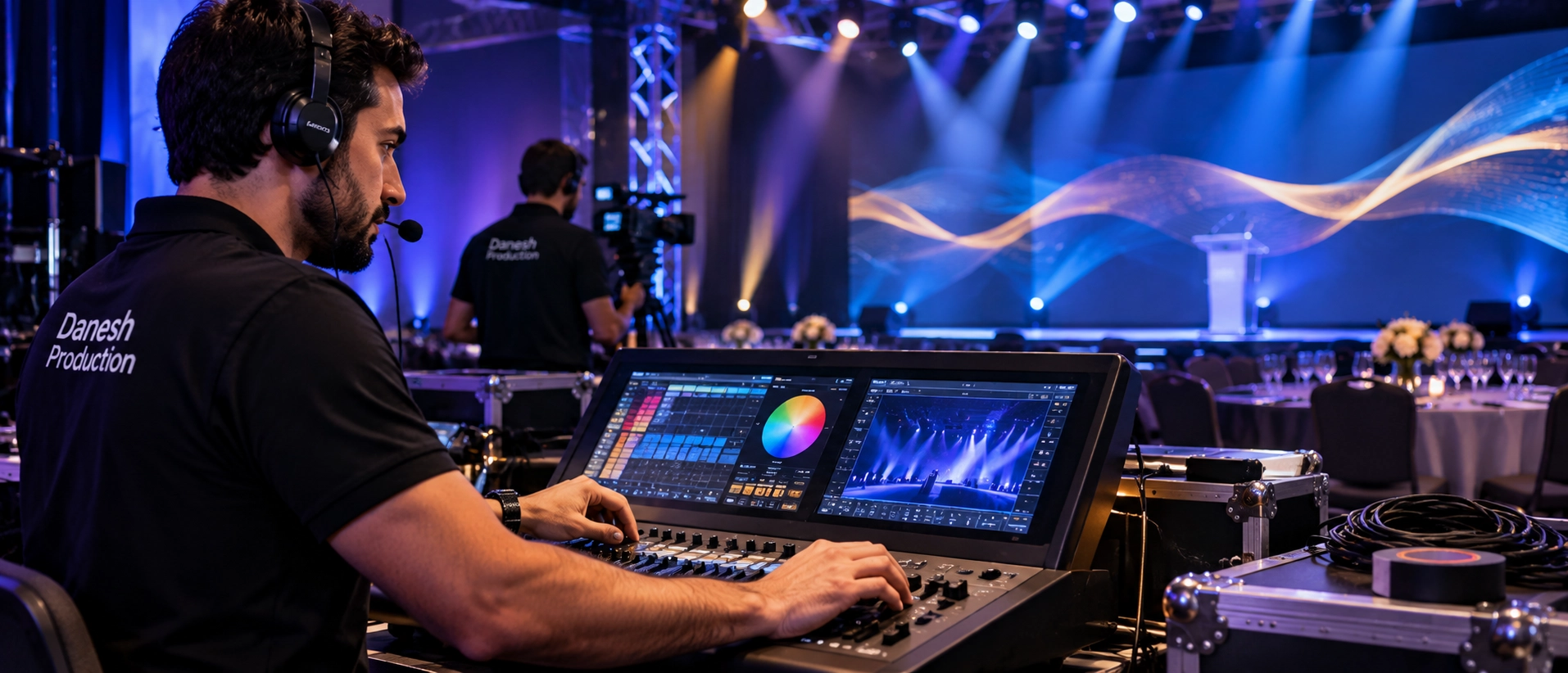
For businesses looking for Event Lighting Vancouver, Event Lighting Design Vancouver, or Professional Lighting Services, Danesh Production offers professional event lighting services for conferences, corporate events, galas, and other professional productions.
Its services include lighting design, stage lighting, uplighting, installation, and on-site technical support.
If you’re planning a corporate event in Greater Vancouver, you can request a corporate event lighting quote based on your venue, programme, and production requirements.
Frequently Asked Questions About Corporate Event Lighting
How Far in Advance Should Corporate Event Lighting Be Booked?
Booking early allows time to review venue conditions, equipment availability, installation requirements, and technical rehearsals. Larger or more complex events generally require more preparation.
Can Corporate Event Lighting Match Brand Colours?
Yes. Many programmable fixtures support branded colour schemes, Gobo Projections, and Corporate Logo Projection. Exact colour reproduction depends on fixture capability, surfaces, and surrounding light.
Can Wireless Lighting Be Used at Corporate Events?
Yes. Wireless and battery-powered lighting can support clean installations where cable routing is difficult. However, signal reliability, battery runtime, and venue conditions must be assessed.
Can One Lighting Setup Work for In-Person and Livestreamed Events?
Yes, provided the setup is designed for both audiences. Camera-friendly illumination, consistent colour temperature, and balanced screen brightness are important for hybrid production.
Final Thoughts
Successful Corporate Event Lighting is about visibility, atmosphere, and timing—not simply using brighter or more expensive fixtures.
By combining thoughtful Lighting Design, suitable equipment, and reliable technical planning, event organizers can create a professional environment that supports speakers, guests, and the event’s objectives.
Whether you’re organizing a conference, gala, product launch, or hybrid event, effective lighting helps every important moment look and feel intentional.